Common Mistakes When Buying a Coffee Roasting Machine
Buying a coffee roasting machine is not just purchasing equipment. It’s committing to a production system that will shape your workflow, product quality, and long-term growth.
And surprisingly, many buyers make the same avoidable mistakes.
If you’re still at the research stage, begin here:
Commercial Coffee Roasting Machine Selection.
Let’s go through the most common errors — so you don’t make them.
Mistake 1: Choosing Based Only on Price
This is the most common one.
A lower price may look attractive at the beginning.
But what matters is:
- Thermal stability
- Mechanical durability
- Long-term reliability
- Maintenance frequency
A machine that struggles with heat recovery or breaks down during peak production will cost more in lost revenue than it saves upfront.
A roasting machine is a production investment — not a short-term purchase.
Mistake 2: Ignoring Real Capacity Needs
Many buyers underestimate production.
They think: “I’ll roast once or twice a week.”
Then wholesale starts growing. Online sales increase. Suddenly, the machine is too small.
Remember:
A professional roaster can typically run three batches per hour — but roasted coffee weighs less than green coffee.
Average weight loss:
- Light roast: 13–15%
- Medium roast: 15–17%
- Dark roast: 17–20%
If you don’t calculate roasted output correctly, your projections will be wrong.
Before deciding, read: How to Choose the Right Coffee Roaster Capacity.
Mistake 3: Overbuying Without a Real Plan
The opposite problem also exists.
Some buyers purchase a large machine with no confirmed sales channel.
A bigger machine means:
- Higher investment
- Higher energy usage
- Larger installation requirements
Growth is important — but it must be realistic.
The right size supports expansion without creating unnecessary financial pressure.
Mistake 4: Ignoring Engineering Quality
Two machines may look similar in photos. Internally, they can be completely different.
Check:
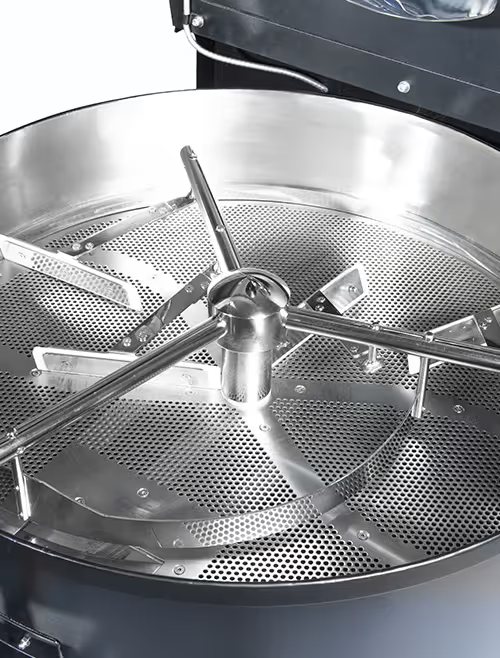
- Drum thickness
- Burner system design
- Bearing quality
- Cooling system strength
- Frame construction
A true professional system is built for continuous operation.
If you’re unsure what separates entry-level from production-grade equipment, read:
What makes a professional coffee roaster different?
Mistake 5: Not Considering Maintenance and Downtime
Every roasting machine requires maintenance.
The key question is: Is it predictable and manageable?
Look at:
- Ease of cleaning
- Accessibility of components
- Spare part availability
- Technical support
Downtime during busy seasons can damage both revenue and reputation.
Mechanical simplicity often equals reliability.
Mistake 6: Forgetting About Workflow
Roasting is only part of the business.
You also need time for:
- Packaging
- Sales
- Marketing
- Wholesale relationships
- Customer communication
If you choose a machine that forces you to roast every day just to keep up, you leave no room for growth activities.
A well-selected commercial machine allows you to:
- Roast efficiently
- Reduce roasting days
- Keep spare capacity for demand spikes
That flexibility protects your business.
Mistake 7: Not Thinking About Brand Positioning
A roasting machine is visible.
Customers see it. Wholesale clients see it.
Being a roastery adds credibility.
A serious production roaster communicates:
- Expertise
- Quality control
- Professionalism
Your equipment becomes part of your brand story.
You can explore production-ready machines here: 👉 Commercial Coffee Roasters
Final Thoughts
When buying a coffee roasting machine, avoid decisions based on:
- ✖ Price alone
- ✖ Guesswork capacity
- ✖ Marketing claims
- ✖ Visual appearance
Instead, focus on:
- ✔ Engineering quality
- ✔ Thermal stability
- ✔ Real roasted output
- ✔ Maintenance predictability
- ✔ Growth compatibility
A carefully chosen commercial roasting machine becomes a long-term asset — not a limitation.