Most people see a coffee roaster as a big rotating drum with a burner underneath.
But a true professional machine is much more than that.
Behind every consistent roast profile is a combination of:
- Thermal mass
- Drum geometry
- Airflow control
- Burner engineering
- Mechanical stability
Understanding how professional coffee roasters are engineered helps you see the difference between appearance and real performance.
If you want the commercial overview first, read:
Commercial Coffee Roasting Machine Selection.
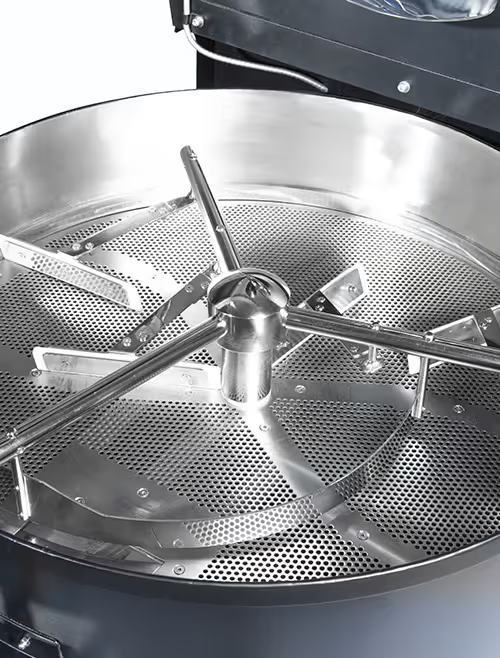
1. Drum Design: The Heart of the System
The drum is not just a rotating cylinder.
Its design determines:
- Heat transfer balance
- Bean movement
- Development uniformity
- Energy retention
Key Engineering Variables
Professional drum design depends on several factors:
- Drum diameter
- Drum length
- Material thickness
- Perforation structure (if any)
- Rotation speed
A larger diameter does not automatically mean better roasting.
The ratio between drum diameter and batch capacity must be engineered correctly.
This is why professional machines behave differently from lighter, entry-level units.
2. Heat Transfer: Three Forces Working Together
Professional coffee roasters rely on three heat transfer methods:
- Conduction (direct contact with the drum)
- Convection (hot air movement)
- Radiation (infrared heat energy)
A well-engineered commercial machine balances these forces carefully.
Too much conduction can scorch beans.
Too much airflow without proper energy can lead to flat development.
Professional systems are designed to allow controlled interaction between these heat sources throughout the roast.
3. Burner System Engineering
In gas-powered commercial machines, burner design is critical.
It determines:
- Heat responsiveness
- Energy efficiency
- Flame stability
- Safety
What Professional Burners Must Deliver
Industrial burners must provide:
- Fast response to adjustments
- Stable flame under varying airflow conditions
- Even heat distribution across the drum
Weak burner systems cause slow heat recovery between batches, directly impacting production efficiency.
In professional roasting environments, consistency across multiple consecutive batches is non-negotiable.
You can explore production-ready roasting systems here:
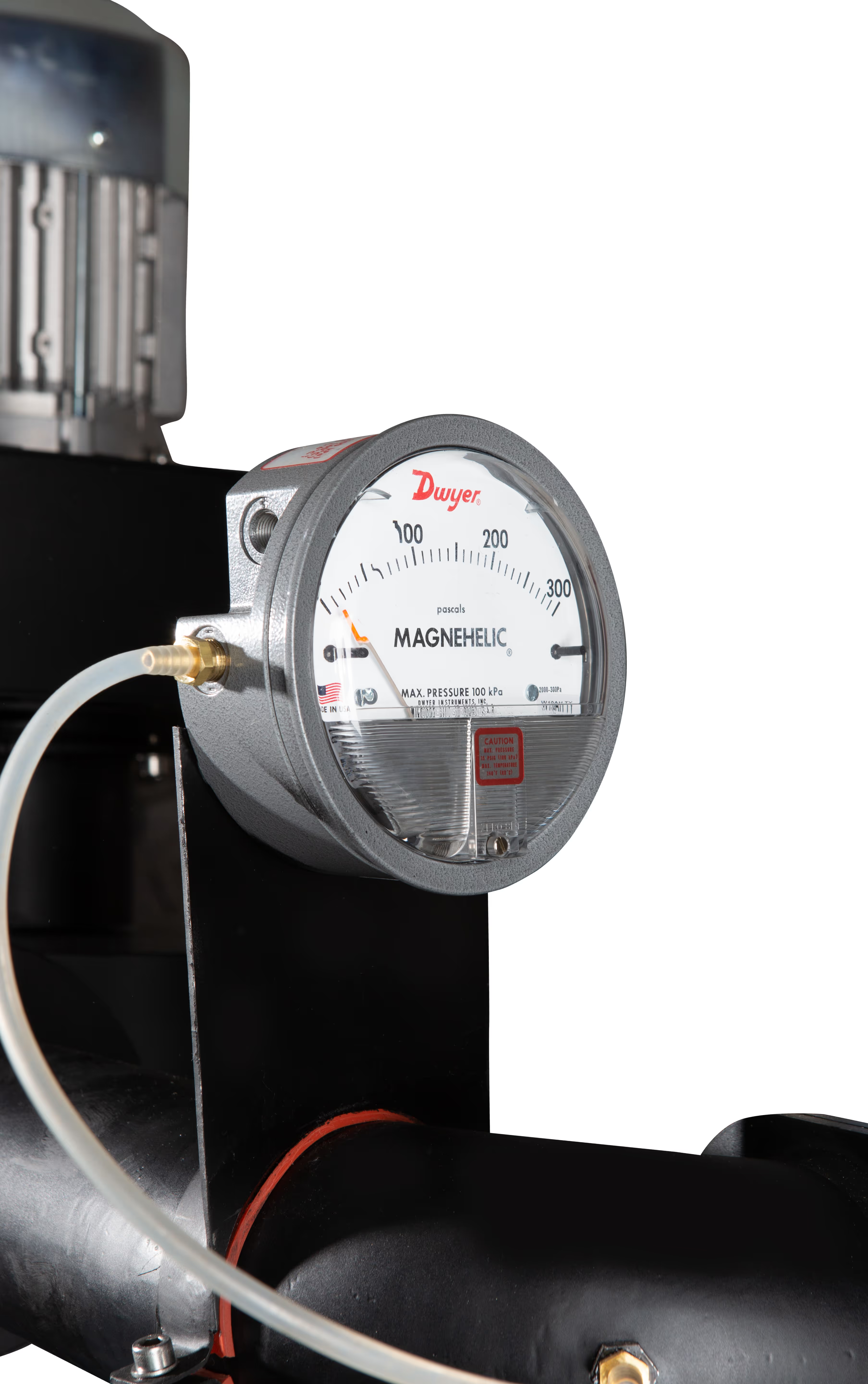
4. Airflow and Pressure Management
Airflow is often underestimated.
In reality, airflow determines:
- Moisture removal
- Chaff evacuation
- Rate of rise control
- Clean cup clarity
Why Airflow Matters
Professional coffee roasters include:
- Adjustable airflow systems
- Strong industrial fans
- Stable pressure management
- Proper exhaust balancing
Poor airflow design can lead to:
- Smoky flavors
- Uneven development
- Heat instability
Engineering airflow correctly is every bit as important as burner design.
5. Thermal Stability and Batch Recovery
In commercial production, roasting is not one batch—it is continuous production.
After finishing a roast, the machine must:
- Discharge beans
- Recover heat
- Stabilize quickly
- Begin the next batch without temperature drift
The Importance of Thermal Mass
Professional coffee roasters are engineered with sufficient thermal mass to prevent:
- Temperature crashes
- Overcompensation heating
- Profile inconsistency
This is one of the biggest differences between hobby-level and production-level machines.
If you’re evaluating quality differences, read:
What makes a professional coffee roaster different?
6. Mechanical Construction and Longevity
Roasting involves:
- High heat
- Constant rotation
- Mechanical stress
- Continuous airflow
Built for Long-Term Operation
Professional machines use:
- Heavy-duty bearings
- Industrial motors
- Reinforced frames
- High-temperature-resistant materials
This mechanical integrity ensures:
- Long lifespan
- Predictable maintenance
- Reduced downtime
In commercial roasting, reliability equals profitability.
7. Engineering for Business, Not Just Performance
Here is the real difference.
A professionally engineered coffee roaster is not built only to roast well once.
It is built to:
- Perform consistently for years
- Handle production pressure
- Support business growth
- Maintain quality under scale
Engineering Decisions Affect Business Results
Engineering decisions directly affect:
- Roast consistency
- Operating costs
- Maintenance frequency
- Brand credibility
When customers see a serious roasting setup, it communicates expertise and professionalism.
If you are comparing machines strategically, this guide helps:
How to Compare Commercial Coffee Roasting Machines?
For examples of production-ready roasting equipment, visit:
Final Thoughts
Professional coffee roasters are engineered through:
✔ Precise drum geometry ✔ Balanced heat transfer ✔ Stable burner systems ✔ Controlled airflow ✔ Strong thermal mass ✔ Industrial mechanical design
It’s not about complexity.
It’s about balance, stability, and long-term reliability.
And that engineering discipline is what separates production-ready systems from entry-level equipment.