How to Compare Commercial Coffee Roasting Machines (Without Regret Later)
When people start comparing machines, they usually look at two things:
Price. And capacity.
But experienced roasters know that choosing a commercial coffee roasting machine is not about what looks good on paper. It’s about what will still make sense three years from now.
If you’re at the evaluation stage, this guide will help you compare machines properly — not just technically, but strategically.
If you’re still early in the research phase, begin here:
Commercial Coffee Roasting Machine Selection
1. Compare Real Hourly Output — Not Just Batch Size
Manufacturers often advertise batch capacity.
But what actually matters is hourly roasted output.
A professional drum roaster can typically complete three batches per hour.
However — and this is important — roasted coffee weighs less than green coffee.
Weight Loss During Roasting
During roasting, beans lose moisture and organic compounds.
Average weight loss:
- Light roast: 13–15%
- Medium roast: 15–17%
- Dark roast: 17–20%
So if you roast 15 kg of green coffee:
- Medium roast output ≈ 12.5–12.7 kg roasted coffee
When comparing machines, always calculate:
Batch size × 3 × (1 – average roast loss)
Otherwise, your production forecast will be overly optimistic.
If you’re unsure what capacity fits your business model, read this first:
How to Choose the Right Coffee Roaster Capacity
2. Heat System: Stability Matters More Than Theory
You already saw the technical differences here:
Gas vs Electric Coffee Roasters: Pros and Cons
But when comparing machines practically, ask:
- How fast does the machine recover between batches?
- Is heat adjustment responsive during first crack?
- Can it maintain stable performance after 3 consecutive roasts?
For growing commercial operations, strong and stable heat delivery becomes critical — especially when production increases.
3. Cooling System Efficiency
Many buyers underestimate cooling performance.
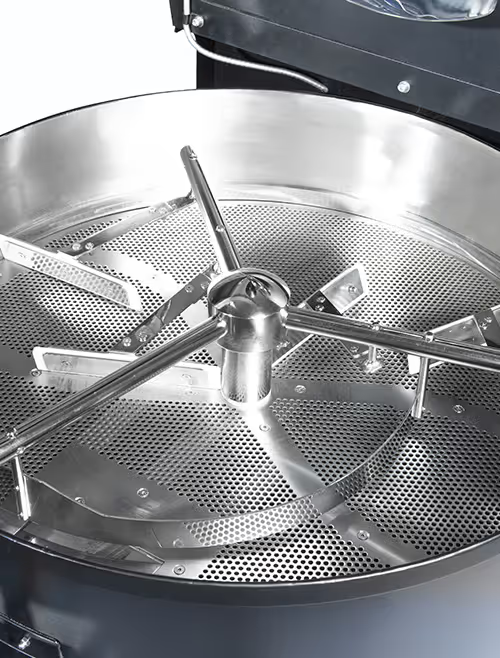
A proper cooling system should:
- Cool beans within 3–5 minutes
- Prevent baking effect
- Handle full batch weight efficiently
If cooling is weak, your roast quality suffers — no matter how good the drum is.
Always check:
- Cooling tray size
- Cooling fan power
- Separation efficiency
4. Build Quality and Mechanical Simplicity
Some machines look impressive but are mechanically complex.
More complexity means:
- More potential failure points
- More maintenance
- More downtime
When comparing, inspect:
- Drum thickness
- Bearing quality
- Motor strength
- Accessibility for cleaning
A good commercial roaster should be strong, straightforward, and serviceable.
Explore available production machines here:
5. Maintenance Requirements (Long-Term Reality)
This is where many comparisons fall apart.
Ask:
- How often does it require deep cleaning?
- Are spare parts easy to access?
- What components wear out first?
For example:
- Electric systems require periodic heating element replacement.
- Gas systems require burner and ventilation inspections.
Downtime costs money.
Predictable maintenance is better than unexpected failure.
6. Daily Workflow Compatibility
Be honest about your operation.
If you:
- Roast
- Pack
- Manage orders
- Handle marketing
- Run a café
…you cannot roast five days a week nonstop.
Many small roastery owners should reduce roasting days intentionally to leave room for:
- Sales
- Wholesale outreach
- Branding
- Customer relationships
This approach also creates spare production capacity for sudden demand increases.
The best commercial coffee roasting machine is the one that supports your real workflow — not an idealized version of it.
7. Scalability: Where Will You Be in 3 Years?
When comparing machines, ask yourself:
- Will I add wholesale accounts?
- Will I increase online sales?
- Will I need faster turnaround?
Buying slightly above your current need often makes sense — as long as it aligns with realistic growth.
You can review full machine models here:
8. Price vs Value (Think Strategically)
Price is important.
But comparison should include:
- Long-term operating cost
- Energy efficiency
- Maintenance predictability
- Resale value
- Brand perception
A professionally built machine also strengthens your positioning.
Being a roastery — not just a café — is a strong marketing advantage. It communicates craftsmanship, quality control, and expertise.
Your machine becomes part of your brand story.
Customers trust visible production.
Final Checklist: How to Compare Properly
When evaluating commercial coffee roasting machines, compare:
- ✔ Real hourly roasted output (with weight loss)
- ✔ Heat stability and responsiveness
- ✔ Cooling efficiency
- ✔ Mechanical build quality
- ✔ Maintenance demands
- ✔ Scalability
- ✔ Operational compatibility
- ✔ Long-term value
Not just price. Not just batch size.
A smart comparison today prevents expensive regret tomorrow.