Starting a coffee roasting business is one of the most attractive opportunities in the specialty coffee industry today.
Margins can be strong. Brand loyalty can be powerful. And unlike cafés, roasting businesses are not limited by seating capacity.
But here’s the reality:
Success in commercial coffee roasting requires more than passion. It requires the right equipment, financial planning, production strategy, and long-term positioning.
In this complete guide, you’ll learn:
- How to start a coffee roasting business step by step
- How much investment is required
- How to choose the right commercial coffee roaster
- Which business model fits you best
- Common mistakes to avoid
If you’re serious about entering the roasting industry, this guide is your foundation.
Step 1: Define Your Coffee Roasting Business Model
Before buying a machine, you must answer this:
Who will you sell to?
There are two primary models:
🔹 Micro Roastery (Direct-to-Consumer)
- Online sales
- Local retail
- Farmers markets
- Small café partnerships
Lower production volume, higher branding focus.
🔹 Wholesale Roastery
- Supplying cafés
- Hotels & restaurants
- Office coffee providers
- Private label production
Higher volume, operational efficiency focused.
Your business model determines your equipment, space, and investment size.
Step 2: Calculate Startup Costs Realistically
Many new roasters underestimate initial investment.
A commercial roasting setup includes:
- Commercial coffee roasting machine
- Afterburner (if required by regulation)
- Destoner
- Packaging equipment
- Green coffee inventory
- Ventilation & gas installation
- Space rental or purchase
- Branding & website
- Working capital
Understanding real costs prevents financial stress during the first year.
Step 3: Choose the Right Commercial Coffee Roaster
Your roasting machine is your core production asset.
Choosing incorrectly can:
- Limit growth
- Increase operating costs
- Create inconsistency
- Force early reinvestment
When selecting a commercial coffee roasting machine, consider:
- Batch capacity
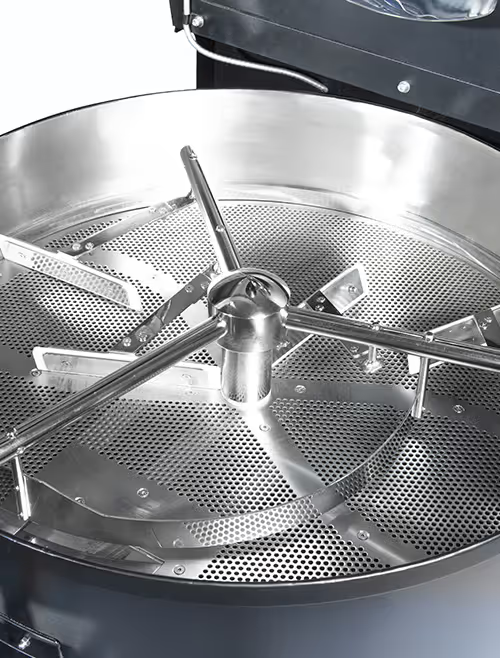
- Drum design
- Burner power
- Thermal stability
- Automation level
- Future scalability
A strong starting point is choosing the right production system:
Your machine should match your 3–5 year growth plan — not just your first month’s production.
Step 4: Understand Production Capacity
A common beginner mistake is misunderstanding daily production capability.
For example: A 5 kg machine does NOT produce only 5 kg per day.
Production depends on:
- Batch time
- Cooling time
- Between-batch recovery
- Operator workflow
- Heat stability
Capacity planning directly affects revenue forecasting.
Step 5: Plan for Profitability (Not Just Passion)
Many new roasters focus only on roasting quality.
But profitability depends on:
- Green coffee sourcing strategy
- Target margin structure
- Packaging cost control
- Energy efficiency
- Sales channel selection
Coffee roasting can be highly profitable — but only with correct positioning and cost control.
Step 6: Avoid the Most Common Startup Mistakes
New roasting businesses often struggle because of:
- Buying oversized equipment too early
- Underestimating gas & installation costs
- Ignoring airflow and ventilation requirements
- Choosing unstable machines
- Not calculating working capital
- Over-focusing on aesthetics instead of engineering
Avoiding these mistakes can save you tens of thousands of euros.
Step 7: Invest in Consistency Systems
In commercial roasting, consistency builds brand reputation.
This includes:
- Thermal stability
- Strong burner systems
- Proper airflow engineering
- Roast profiling software
Professional infrastructure separates hobby roasting from scalable business.
How Much Does It Cost to Start a Coffee Roasting Business?
This depends on scale.
Typical ranges:
- Micro roastery setup: €25,000 – €60,000
- Small commercial setup: €60,000 – €150,000
- Mid-size wholesale production: €150,000+
These numbers vary by country, gas regulations, and machine size.
But the most important factor is this:
Start with a structure that allows growth without forcing early reinvestment.
Is Starting a Coffee Roasting Business Worth It?
Yes — if you approach it strategically.
Advantages
- ✔ High product margin potential
- ✔ Scalable production
- ✔ Growing specialty coffee demand
- ✔ Strong B2B opportunities
Challenges
- Equipment investment
- Technical learning curve
- Market competition
- Cash flow management
Coffee roasting is not just about roasting beans. It is about building a production system.
Final Thoughts
Starting a coffee roasting business requires:
- A clear business model
- Accurate financial planning
- The right commercial coffee roasting machine
- Strong engineering infrastructure
- Long-term scalability vision
If done correctly, roasting can become a highly profitable and sustainable business.
But success begins with planning — not purchasing.