Manual vs Automatic Coffee Roasting Machines: Which One Fits Your Business?
When investing in a commercial roasting setup, one of the most common questions is:
Should I choose a manual or automatic system?
At first glance, automatic sounds more advanced. Manual sounds more traditional.
But in reality, the difference is not about “better” or “worse.” It’s about control philosophy, production scale, and operator skill.
If you’re still exploring overall machine types, start here: Commercial Coffee Roasting Machine Selection.
What Is a Manual Coffee Roasting Machine?
A manual coffee roaster requires the operator to control:
- Gas pressure
- Airflow
- Drum speed (in some systems)
- Roast timing
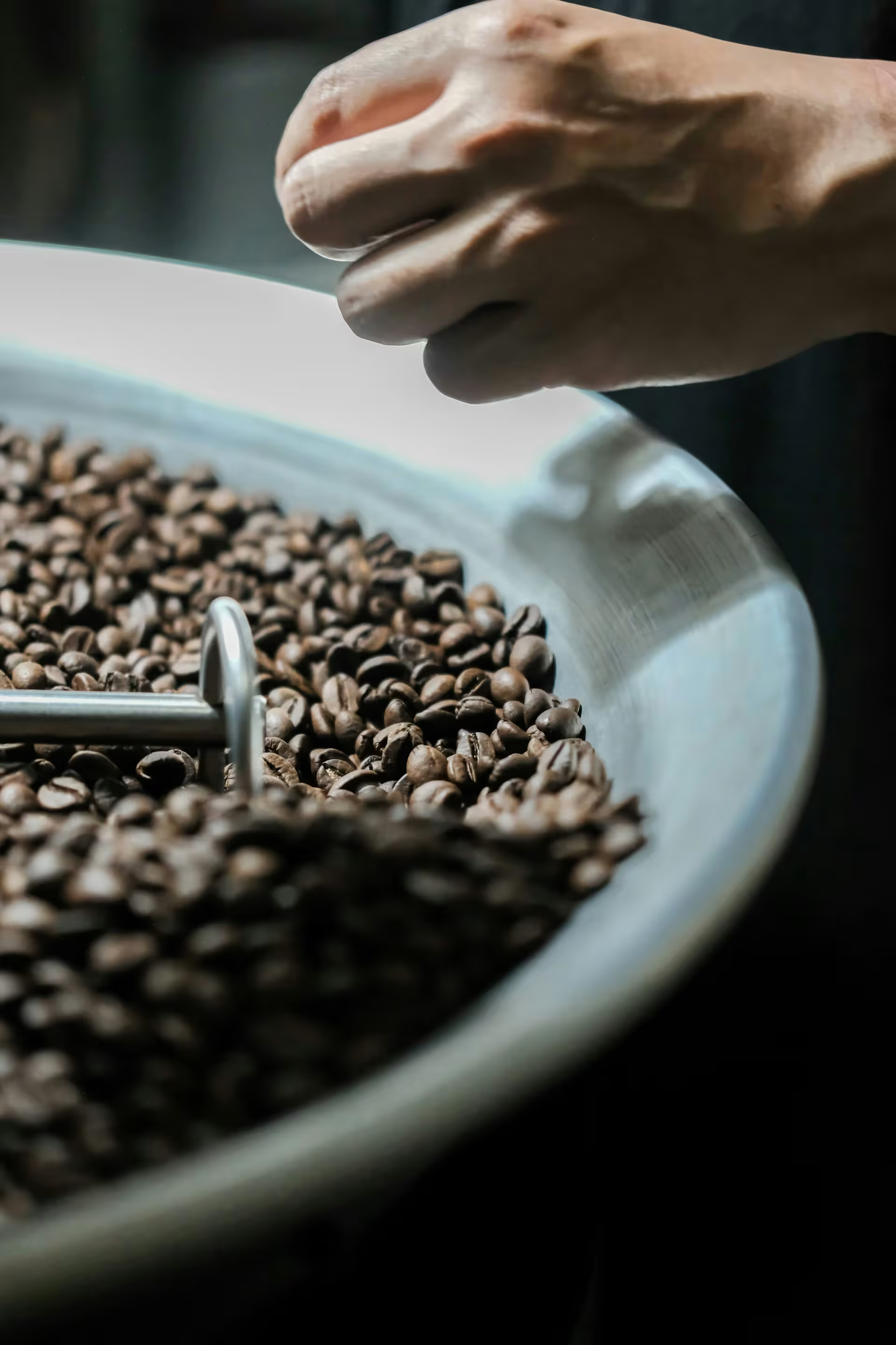
There is no automatic curve replication. The roaster reads the beans, listens to cracks, watches color, smells development, and adjusts heat accordingly.
Advantages of Manual Systems
- ✔ Maximum hands-on control
- ✔ Deep understanding of roast behavior
- ✔ Flexible profile experimentation
- ✔ Strong craftsmanship positioning
Many experienced roasters prefer manual control because it allows them to react instantly during first crack and development phase.
What Is an Automatic Coffee Roasting Machine?
An automatic coffee roaster integrates software-based control systems.
These machines can:
- Store roast profiles
- Replicate temperature curves
- Adjust gas and airflow automatically
- Reduce operator intervention
Automation is often associated with consistency and scaling production.
But there’s an important nuance.
Automation does not replace roasting knowledge. It replicates what was programmed correctly in the first place.
The Real Difference: Control vs Replication
Manual systems emphasize:
Skill-driven roasting.
Automatic systems emphasize:
Profile replication.
If you roast multiple batches daily for wholesale clients, consistency becomes extremely important.
However, even automatic systems require a skilled operator to:
- Create initial profiles
- Adjust for green coffee changes
- Monitor environmental variations
Automation supports production — it does not eliminate responsibility.
Production Scale and Workflow
If you:
- Roast 1–2 days per week
- Focus on café supply
- Enjoy hands-on roasting
Manual control may be perfectly suitable.
If you:
- Roast multiple days weekly
- Supply wholesale accounts
- Need repeatable results under time pressure
Automation becomes more valuable.
Before deciding, evaluate your capacity planning here: How to Choose the Right Coffee Roaster Capacity.
Consistency in Commercial Environments
In production-focused environments, back-to-back roasting stability matters more than theoretical automation.
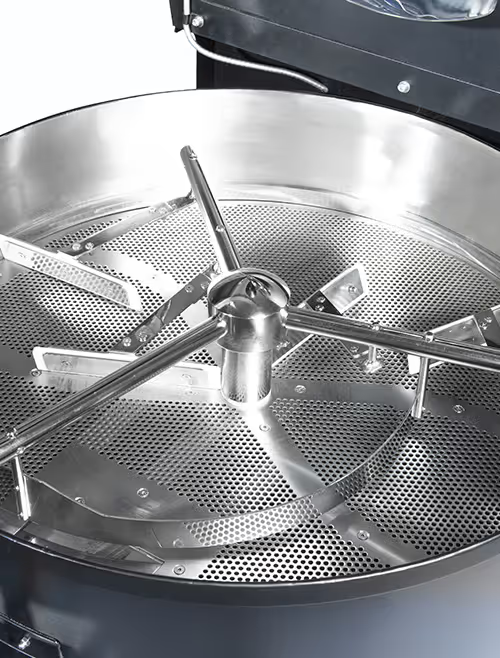
Strong thermal stability, heat responsiveness, and drum design often affect consistency more than software features alone.
A well-engineered machine with stable gas control can produce extremely consistent results — even in manual mode.
Maintenance and Complexity
Manual Systems
- Mechanically simpler
- Fewer electronic components
- Easier long-term servicing
- Lower software dependency
Automatic Systems
- Require software updates
- May involve sensors and control boards
- Depend more heavily on electronic components
In commercial environments, simplicity often means reliability.
Downtime affects revenue.
Skill Development and Brand Positioning
There’s also a brand perspective.
Being known as a hands-on roastery communicates craftsmanship and expertise.
Customers appreciate the human element in roasting.
Automation supports growth — but skill defines identity.
So, Which One Should You Choose?
Ask yourself:
- How many batches per week will I roast?
- Will I supply wholesale clients?
- Do I want maximum manual control?
- How experienced is my roasting team?
- How important is mechanical simplicity?
There is no universal answer.
But for many growing commercial roasteries, the ideal balance is:
Strong mechanical system + controlled gas precision + operator skill
Supported by monitoring tools — not replaced by full automation.
You can explore professional production-ready machines here: 👉 Commercial Coffee Roasters
Final Thoughts
Manual vs automatic coffee roasting machines is not about technology level.
It’s about:
- ✔ Control philosophy
- ✔ Production demand
- ✔ Team expertise
- ✔ Scalability goals
- ✔ Long-term reliability
The right commercial coffee roasting machine supports both craftsmanship and consistency — without unnecessary complexity.