What Makes a Professional Coffee Roaster Different?
Not every coffee roaster is built for professional production.
Some machines are designed for hobbyists. Some are made for small cafés roasting occasionally. And some are engineered for serious, continuous commercial use.
Understanding the difference between a basic machine and a professional coffee roaster can save you from expensive mistakes later.
If you’re new to commercial roasting systems, start here:
Commercial Coffee Roasting Machine Selection
1. Thermal Mass and Heat Stability
The first major difference is thermal stability.
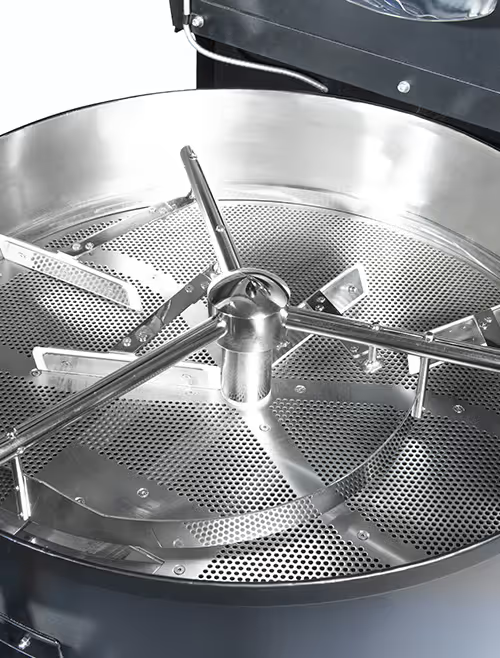
A professional coffee roaster is built with:
- Thicker drum material
- Stronger frame construction
- Industrial-grade burners
- Controlled airflow systems
Why does this matter?
Because roasting is about managing energy.
A lightweight machine may heat up quickly — but it also loses heat quickly. Inconsistent heat means inconsistent roast results.
Professional machines are designed to:
- Maintain stable temperature between batches
- Recover heat quickly
- Handle back-to-back roasting without performance drop
That stability becomes critical once you start roasting multiple batches per day.
2. True Commercial Capacity
Batch size printed on a brochure is not enough.
A professional coffee roaster must deliver:
- Three consistent batches per hour
- Stable cooling performance
- Predictable roast curves
And remember — roasted coffee weighs less than green coffee due to moisture loss.
Average Roast Weight Loss
- Light roast: 13–15%
- Medium roast: 15–17%
- Dark roast: 17–20%
So a production-level machine must handle not just volume, but efficiency.
If you are still calculating what size fits your business, read:
How to Choose the Right Coffee Roaster Capacity
3. Mechanical Strength and Longevity
A professional machine is expected to work for years — not months.
Key differences include:
- Industrial motors
- Heavy-duty bearings
- Strong drum shafts
- Durable cooling fans
- Reinforced chassis
Lower-end machines may look similar externally, but inside the engineering is very different.
Mechanical simplicity and strength reduce:
- Unexpected breakdowns
- Downtime
- Maintenance stress
In commercial roasting, reliability equals revenue protection.
4. Heat Control Precision
Professional roasting requires precise control over:
- Gas pressure
- Airflow
- Rate of rise
- Development time
Entry-level machines often lack responsive heat control.
A professional coffee roaster allows you to:
- Adjust heat instantly
- Maintain stable airflow
- Repeat roast profiles consistently
If you’re comparing machines in detail, this guide helps:
How to Compare Commercial Coffee Roasting Machines
5. Cooling Efficiency
Cooling is often underestimated.
A professional roaster must cool beans quickly to:
- Stop development at the right moment
- Prevent baking effect
- Preserve clarity and sweetness
Strong cooling fans and properly designed cooling trays make a noticeable difference in cup quality.
6. Built for Business — Not Just Roasting
Here is something many people overlook.
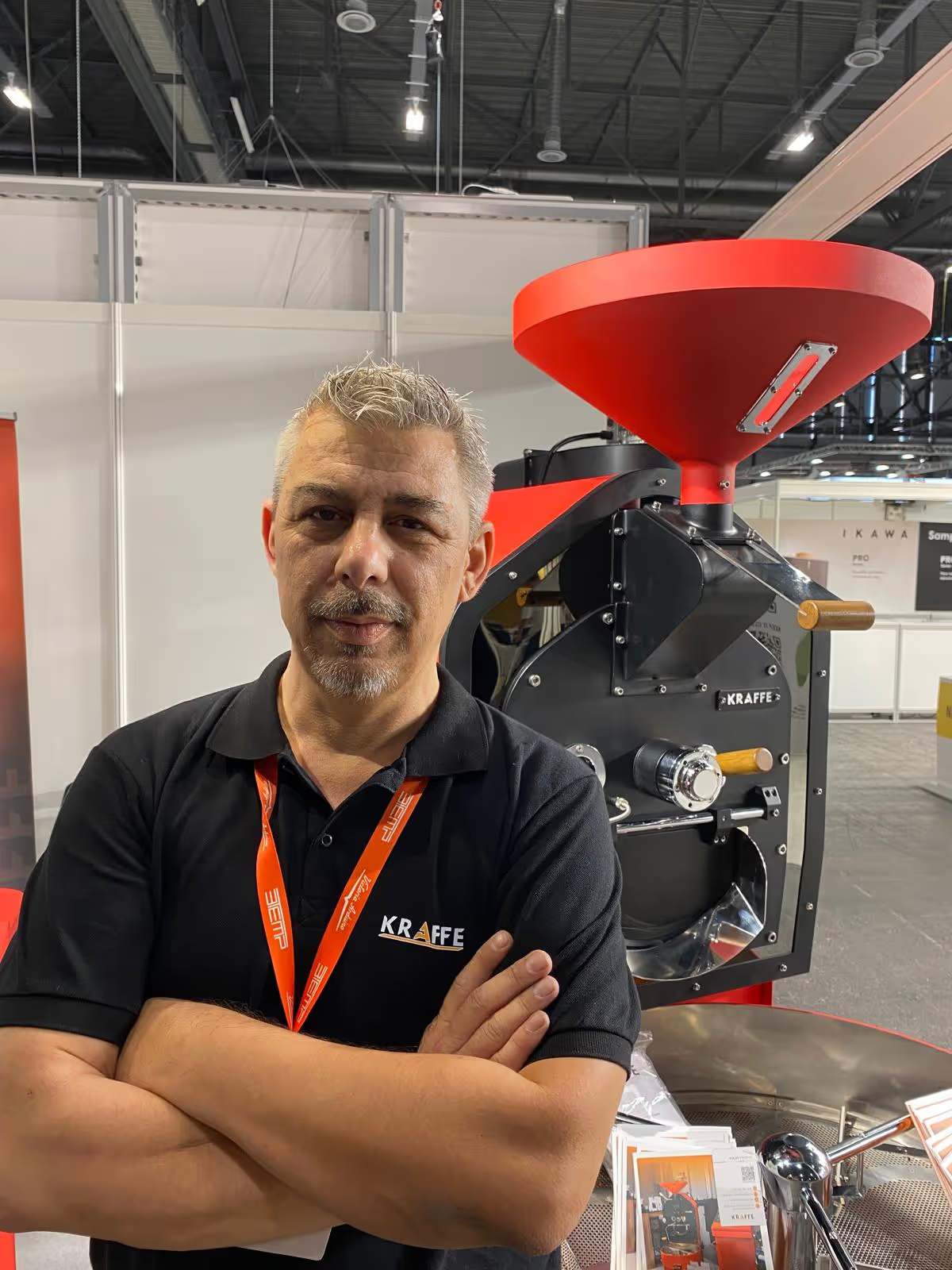
A professional coffee roaster is not just equipment.
It is part of your brand identity.
When customers see:
- A full production roaster
- Industrial build quality
- Real roasting setup
It communicates:
- Expertise
- Control
- Authenticity
- Commitment
Being a roastery — not just a café — gives you a serious marketing advantage.
It strengthens wholesale credibility and builds trust with retail customers.
7. Designed for Growth
A real professional machine supports:
- Multiple roasting days
- Increased batch frequency
- Wholesale scaling
- Sudden demand spikes
It allows you to intentionally reduce roasting days to leave room for:
- Sales
- Marketing
- Customer relationships
- Business development
And still maintain spare capacity.
That flexibility is what separates serious roasting businesses from small operations that constantly struggle with production limits.
You can explore production-ready systems here:
Final Thoughts
A professional coffee roaster is defined by:
- ✔ Thermal stability
- ✔ Mechanical durability
- ✔ Consistent heat control
- ✔ Efficient cooling
- ✔ Commercial-grade engineering
- ✔ Long-term reliability
It is built for business — not experimentation.
Choosing a true professional system protects your quality, supports growth, and strengthens your brand positioning in the market.