Quick Answer: Light roast coffee is coffee taken out of the roaster shortly after first crack, typically at a bean temperature of 195–205°C (385–401°F) with an Agtron reading above 70. It delivers a vibrant, cup profile bursting with floral, citrus and fruit notes with lighter body and high origin transparency. By weight, light and dark roasts contain virtually identical caffeine. Because its development window is just 60–90 seconds, achieving consistent light roasts demands responsive burner control, precise airflow management, and rapid cooling.
What Is Light Roast Coffee?
Light roast coffee is coffee that is taken out of the roaster shortly after first crack, typically at a bean temperature of about 195–205°C (385–401°F). The beans are light to cinnamon brown, dry on the surface, and dense. In the cup, light roasts taste brighter, more acidic, and more “origin-driven” than medium or dark roasts, with fruit, floral, and tea-like notes instead of chocolate, caramel, and smoke.
On the Agtron scale, the colour meter roasters use to measure roast degree objectively, light roasts usually read above 70. The higher the number, the lighter the roast.
As a roasting machine manufacturer, we see light roast from the other side of the drum: it is the roast level that leaves the least room for error. This guide explains what light roast is, how it tastes, how much caffeine it contains, how to brew it, and what it takes to roast it consistently at commercial scale.
What Happens During a Light Roast
A light roast goes through the same initial thermal stages as every roast but stops right after first crack. What separates it from darker roasts is where the roaster drops the beans, not a completely different process.
- Drying (green to yellow): The green beans lose most of their internal moisture. They turn pale yellow and release grassy, hay-like aromas.
- Maillard and browning: Sugars and amino acids react, the beans turn tan and then light brown, and bread-like, toasted aromatics appear.
- First crack: Steam pressure inside the bean expands and cracks its cellular structure with an audible pop, usually around 196–205°C (385–401°F) depending on the coffee variety, density, and machine geometry. This is the earliest point at which coffee is considered drinkable and chemically developed.
- Development and drop: For a light roast, the roaster lets the beans develop for roughly 1:00–1:30 minutes after first crack begins, then drops them into the cooling tray, often at around 200–205°C. A medium roast keeps going toward second crack; a dark roast goes into or past it.
That short development window is the critical variable. Too short and the coffee tastes grassy, sour, and underdeveloped; a little longer and it slides into medium roast territory.
How Light Roast Looks, Smells and Tastes
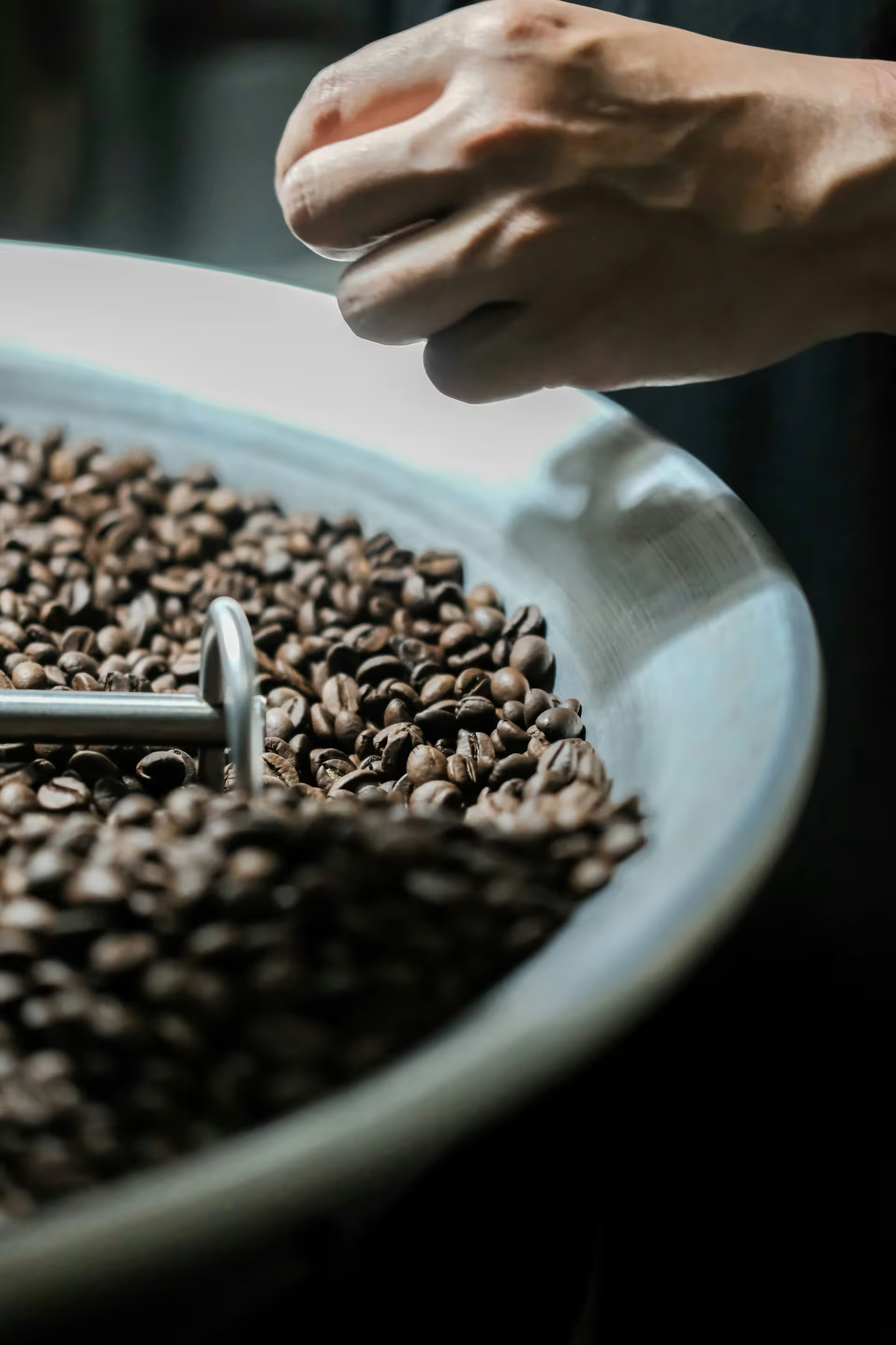
Light roast is easy to identify visually: the beans are light to cinnamon brown, matte, and completely dry, with zero oil on the surface. They are also noticeably harder and denser than darker beans because they have lost less moisture and expanded less inside the drum.
In the cup, the main sensory traits include:
- High, bright acidity: Think citrus, green apple, crisp berry, or stone fruit rather than sharp sourness when the roast is properly developed.
- Clear origin character: Because roast flavors (pyrolysis) are kept to a minimum, the terroir, cultivar, and processing method of the green coffee shine through unimpeded. An Ethiopian washed coffee tastes floral, jasmine-scented, and tea-like; a Kenyan lot bursts with blackcurrant, red fruit, and grapefruit.
- Lighter body: The mouthfeel is delicate, clean, and silky—more akin to fine tea than a heavy, syrupy medium or dark roast.
- Delicate sweetness: Notes of honey, raw cane sugar, maple, or fresh fruit sweetness dominate, with very little caramel, chocolate, or smoky bitterness.
This clarity is why specialty roasters favor light roasts for single-origin coffees: the roast steps aside so the bean can speak. The flip side is that light roast also exposes every defect in the green coffee and every mistake in the roast curve.
Light Roast Names: Blonde, Cinnamon, New England and More
There is no single legal standard for roast names, meaning the same label can signify different shades across different roasteries. The names below are the most common designations for the light end of the spectrum, ordered from lightest to darkest:
| Name | Typical Agtron Range | What It Means |
|---|---|---|
| Nordic / Scandinavian | Very light, often 85+ | Ultra-light specialty style, popular for filter; very high acidity and supreme origin clarity |
| Blonde | ~85–95 | Pulled very early in or around first crack; pale golden brown, mild, delicate, and sweet |
| Cinnamon | ~75–85 | Ends around the end of first crack; light brown, matte surface, light body |
| New England / Light City / Half City | ~65–75 | Slightly darker light roast; more sweetness and mouthfeel while remaining bright and crisp |
Note: Agtron ranges are approximate and differ between charts and instruments. Colipse Coffee publishes one widely cited set; Coffee Review simply treats anything above 70 as light.
“Blonde roast” is primarily a retail and commercial term popularized by large coffee chains. For a professional roaster, the more accurate and repeatable language relies on drop temperature, development time ratio (DTR) after first crack, and the objective Agtron reading of the ground coffee.
Light vs Medium vs Dark Roast: Direct Comparison
The defining difference between the three roast styles is how far past first crack the beans are taken, which shifts the flavor profile from bean origin characteristics toward roast characteristics.
| Feature | Light Roast | Medium Roast | Dark Roast |
|---|---|---|---|
| When it’s dropped | Shortly after first crack | Between first and second crack | Into or past second crack |
| Approx. end temperature | 195–205°C (385–401°F) | 210–220°C (410–428°F) | 225°C+ (437°F+) |
| Agtron reading (approx.) | 70+ | 50–70 | Below 50 |
| Bean surface | Dry, matte | Dry to slightly satin | Oily, shiny, dark sheen |
| Acidity | High, lively, citric/malic | Balanced, rounded | Very low, muted |
| Body | Light, tea-like, silky | Medium, rounded | Heavy, syrupy, viscous |
| Typical flavours | Fruit, floral, citrus, herbal tea | Caramel, nuts, milk chocolate, stone fruit | Dark chocolate, baker’s cocoa, smoke, molasses |
| Best brew methods | Pour-over (V60, Kalita), Chemex, AeroPress | Drip, espresso, batch brew, everyday blends | Milk-based espresso, French press, moka pot |
Temperatures are typical bean-probe readings and vary with machine design, probe placement, and batch size, so treat them as a relative guide rather than a fixed universal recipe.
Neither roast level is inherently “better”. Light roasts showcase what the green coffee can do at its purest; medium roasts represent the crowd-pleasing balance of sweetness and body; dark roasts deliver the bold, roasty, and comforting profile that many traditional coffee drinkers cherish.
Is Light Roast Coffee Stronger? The Caffeine Question
Short answer: By the scoop (volume), light roast usually has slightly more caffeine; by weight (grams), the difference is close to zero. “Strength” in taste is a different matter: dark roast tastes bolder and more bitter, while light roast tastes brighter and more acidic.
Caffeine is remarkably heat-stable at standard roasting temperatures (sublimating only above 235°C / 455°F), so an individual coffee bean contains virtually the same amount of caffeine whether roasted light, medium, or dark. What actually changes during roasting is the physical bean:
- The longer coffee roasts, the more moisture it loses (typically 12–15% for light roasts vs 18–22% for dark roasts).
- The beans puff up, expanding in physical volume while decreasing in density.
Volume vs Weight
- Measured by volume (scoops, tablespoons): A scoop of dense light roast contains more individual beans and greater mass than a scoop of puffed-up dark roast. Naturally, brewing by scoop yields a more caffeinated cup. In a Cook’s Illustrated laboratory test, light roast brewed by volume had approximately 60% more caffeine.
- Measured by weight (grams): When the same test weighed the coffee grounds on a precision scale, both cups contained virtually identical caffeine levels. It simply took about 2.5 extra tablespoons of dark roast to match the mass of the light roast.
Results can vary slightly by bean variety. Research reported by Sprudge noted that dark roast can occasionally edge out light roast per gram because non-caffeine organic mass burns off slightly faster than caffeine itself. The practical takeaway remains clear: bean genetics (canephora/robusta vs arabica), brew ratio, and extraction yield matter vastly more than roast degree. Always weigh your coffee dose on a scale for consistent caffeine delivery.
How to Brew Light Roast Coffee
Light roast beans are denser, harder, and less porous than darker roasts, meaning hot water extracts soluble solids more slowly. Brewed with the same recipe as a dark roast, a light roast will often taste sharp, vegetal, and sour.
Recommended Brewing Methods
- Pour-Over (Hario V60, Kalita Wave, Chemex): Paper-filtered manual drip methods provide supreme clarity, allowing bright fruit acidity and delicate floral volatiles to shine.
- Batch-Brew Filter: Automated commercial filter brewers produce clean, uniform cups when dialed in with high brew temperatures.
- AeroPress: High extraction potential with customizable brew parameters (temperature, steep time, agitation).
- Modern Espresso: Light roasts make spectacular modern espresso, but require higher water temperatures, finer grinds, and longer extraction ratios (e.g., 1:2.2 to 1:2.5) to avoid harsh underextraction.
Pro Brewing Tips for Light Roasts
- Use hotter water: Brew at 93–96°C (200–205°F), toward the very top of the specialty range, to encourage thorough extraction of dense sugars and acids.
- Grind slightly finer: Increase surface contact area compared to what you would use for a medium roast on the same device.
- Extend contact time: If the cup tastes unpleasantly tart or thin, slightly slow down your pour rate or extend steep time.
- Rest your beans: Because light roasts are dense and retain tight cellular structures, freshly roasted beans require degassing. Most specialty roasters recommend waiting 7 to 14 days post-roast before brewing for optimal flavor development.
- Adjust for balance: If the cup tastes sour, salty, or grassy, extract more (grind finer, use hotter water, increase contact time). If it tastes unpleasantly dry or astringent, extract slightly less.
Roasting Light Roast Commercially: Why It Is the Hardest Roast to Get Right
Light roast is the least forgiving roast profile in a commercial roastery. With only about 60 to 90 seconds of development after first crack, a variance of just two degrees or five seconds determines whether a batch tastes complex and juicy or grassy and astringent.
Common roasting pitfalls include:
- Underdevelopment (internal stall): The bean surface reaches a light brown color, but the bean core fails to cook through. The cup tastes vegetal, sour, grassy, or like raw peanut shell.
- Batch-to-batch drift: Fluctuations in ambient warehouse temperature, green bean temperature, charge weight, and between-batch protocol (BBP) shift the exact second first crack triggers.
- Scorching and tipping: Applying excessive conductive heat early in the roast to “rush” drying can burn bean edges while leaving the interior raw.
- Post-crack stall or crash: If the Rate of Rise (RoR) drops precipitously at first crack due to thermal shock from escaping moisture, the roast stalls, resulting in baked, flat, cardboard flavors devoid of vibrant acidity.
What Equipment Matters for Light Roasts
Achieving consistent commercial light roasts does not come from a “magic” roast curve—it requires an engineered machine capable of responsive, repeatable thermodynamic control. When investing in commercial roasting equipment for specialty light-roast production, key priorities include:
- Modulating burner control: Micro-fine burner adjustments allow you to smoothly feather heat input leading up to first crack, preventing both stalling and sudden temperature spikes.
- Variable airflow management: Independent, stepless airflow enables the operator to adjust convection vs. conduction dynamically, sweeping away chaff and humidity during the crucial development phase.
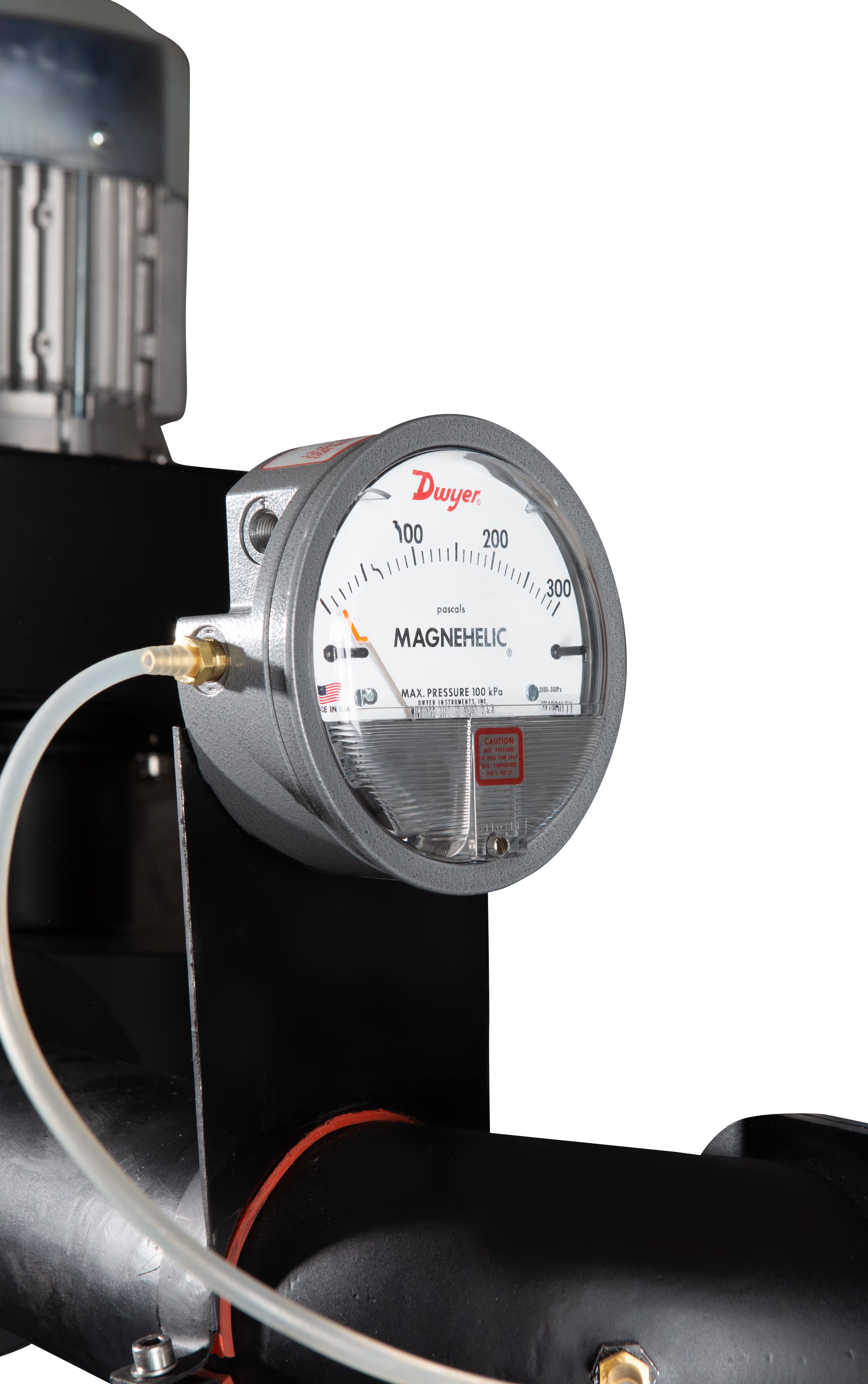
- Fast-responding 3 mm thermocouples: Thin, ungrounded probes provide live, low-latency RoR telemetry in software like Artisan and Cropster so you can anticipate curve shifts before they happen.
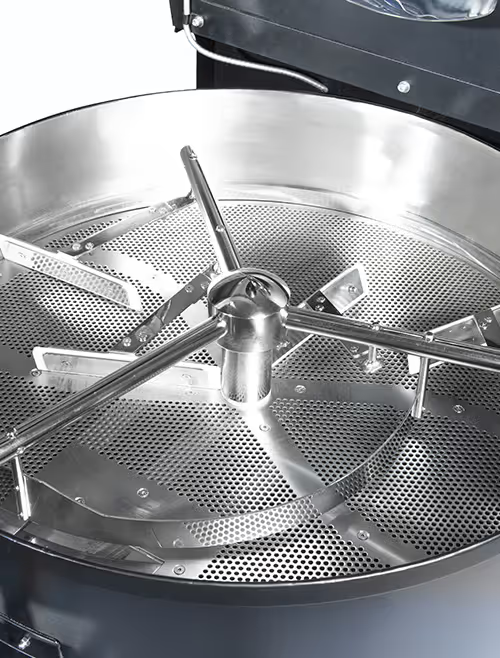
- Double-walled drum construction: Balances gentle conductive heat with strong convective airflow, shielding fragile high-altitude specialty lots from surface scorching.
- Rapid high-volume cooling: Cooling must stop roasting within 3 minutes; otherwise, lingering heat continues roasting the batch in the tray, spoiling your light profile.
- Color assessment QC: An optical roast color meter (Agtron or equivalent) in your quality control lab ensures every production batch conforms to strict numerical tolerances.
At Kraffe, our commercial coffee roasters are engineered specifically for specialty precision. With precision modulating premix gas burners, variable drum speed, stepless exhaust control, and factory-integrated 3 mm probes, Kraffe machines provide the thermal stability needed to replicate tight 1:15 development windows batch after batch. For help selecting the optimal drum capacity and setup, read our guide on how to choose a coffee roaster machine.
Frequently Asked Questions
What coffee is considered light roast?
Any coffee dropped shortly after the start of first crack, exhibiting light cinnamon-brown color, a completely dry surface, and an Agtron reading generally above 70. Retail labels include light, blonde, cinnamon, New England, half city, and Nordic roast.
Is light roast coffee stronger?
By volume (per scoop), it can carry slightly more caffeine because the beans are denser and pack tighter. Measured by weight (grams), caffeine content is virtually identical across roast levels. In flavor, light roast is brighter, more acidic, and floral—not bolder or more bitter.
What is better, light roast or medium roast?
Neither is objectively superior. Choose light roast if you prefer vibrant, complex, fruity cups that highlight individual farm origin and processing terroir. Choose medium roast if you prefer a rounded body with familiar chocolate, caramel, and nutty sweetness that excels across both espresso and drip.
What are the drawbacks of light roast coffee?
It can taste sour, vegetal, or astringent if underdeveloped or underextracted; it has a thinner body; and it requires careful grinder adjustment for espresso. It also magnifies any defect in the green coffee, meaning only high-grade specialty green coffee can be roasted light successfully.
Is light roast coffee more acidic?
Yes, in terms of perceived cup acidity and sensory brightness. Extended roasting gradually degrades chlorogenic, citric, and malic acids, which is why darker roasts possess much lower perceived acidity.
Is blonde roast the same as light roast?
Yes, blonde roast is a category of light roast, typically on the lighter end of the spectrum (~85–95 Agtron). The term is primarily retail branding popularized by commercial coffee shop chains.
Is light roast healthier?
Light roasts tend to preserve higher concentrations of chlorogenic acids, potent antioxidants that partially break down under longer roasting exposure. However, both light and dark roasts offer valuable health benefits, and overall physiological differences are minor.
Conclusion: Light Roast in One Sentence
Light roast is coffee stopped just after first crack: bright, fruity, and transparent to its terroir, containing essentially the same caffeine as darker roasts by weight, and representing the most technically demanding roast level to produce with commercial repeatability.
For coffee drinkers, mastering light roast means brewing slightly hotter and grinding finer. For professional roasters, it means relying on precise burner modulation, agile airflow, and low-latency probes so every single batch lands squarely in that narrow development window.
Planning to add light and specialty roasts to your roastery’s offerings? Explore Kraffe’s commercial coffee roasters or contact our technical team to discover the ideal machine and capacity for your business.
Sources
- Seattle Coffee Gear – Coffee Roast Levels Explained
- Coffee Review – Darker-Roasted Coffees (Agtron ranges)
- Colipse Coffee – Coffee Roast Levels
- BloomVik – Santoker Masterclass Part 2 (development time, drop temperature)
- Cook’s Illustrated – Caffeine Content: Dark Roast vs. Light Roast
- Sprudge – Does Dark Roast Coffee Really Have More Caffeine?