When people evaluate a commercial coffee roaster, they often ask:
“How many kilograms?” “How much power?”
But the real question should be:
How is the burner system designed?
Because in gas-powered machines, the burner is the heart of the entire heat transfer system.
To understand how everything works together, it helps to first look at
👉 How Professional Coffee Roasters Are Engineered?
The burner does not work alone.
It interacts with:
- Drum geometry
- Airflow system
- Thermal mass
- Insulation
- Control mechanisms
If the burner system is unstable, the entire roasting process becomes reactive instead of controlled.
Why Burner Design Matters in Commercial Coffee Roasters
In gas coffee roasters, the burner controls:
- Heat intensity
- Flame stability
- Response time
- Energy distribution
- Radiation balance
A strong burner is not just about high power.
It is about precise, stable, and adjustable energy.
Poor burner systems often cause:
❌ Sudden temperature spikes ❌ Slow reaction to adjustments ❌ Inconsistent rate of rise ❌ Uneven radiation inside the drum
Professional machines are engineered to avoid these problems.
Types of Burner Systems in Gas Coffee Roasters
There are generally two main burner system approaches:
1️⃣ Atmospheric Burners
These are simpler systems.
They rely on natural air mixing with gas before combustion.
Advantages:
- Mechanically simple
- Lower cost
- Easy maintenance
Limitations:
- Less precise modulation
- Slower response
- Limited flame control range
Atmospheric burners can work well in smaller machines, but in high-capacity commercial coffee roasters, control precision becomes more critical.
2️⃣ Premix Burners
Premix burners mix gas and air before combustion in a controlled chamber.
Advantages:
✔ Faster response time ✔ More precise flame control ✔ Cleaner combustion ✔ Higher efficiency
These systems are commonly used in professional production-level machines where stability and repeatability matter.
Premix systems allow fine adjustments during roast phases — especially during development and first crack.
You can also explore KRAFFE commercial and industrial coffee roasters to see machines equipped with professional roasting systems.
Burner Systems and Heat Transfer Balance
The burner directly influences all three heat transfer mechanisms:
- Conduction (via drum surface heating)
- Convection (via heated airflow)
- Radiation (via flame and hot metal emission)
If you haven’t yet, read our detailed explanation of heat transfer in coffee roasting to understand how these mechanisms interact.
A well-designed burner system ensures:
✔ Smooth rate of rise curves ✔ Controlled energy application ✔ Stable development phase ✔ Reduced risk of scorching
Burner instability creates unpredictable roast curves.
Flame Distribution and Drum Geometry
Burner placement and flame direction matter.
Flame should:
- Distribute heat evenly across the drum
- Avoid hot spots
- Support consistent radiation
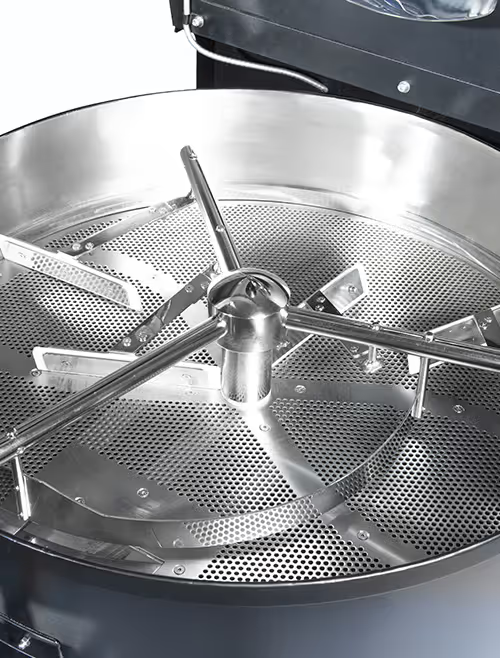
Drum size and shape influence how burner energy spreads inside the chamber.
For example, drum diameter directly impacts how heat transfers from flame to drum surface.
See Drum diameter vs batch capacity for a deeper look at this relationship.
Burner and drum design must be engineered together — not separately.
Burner and Airflow Interaction
Burner output alone does not define roasting performance.
Airflow must support combustion and heat distribution.
If airflow is poorly designed:
- Flame efficiency drops
- Heat becomes unstable
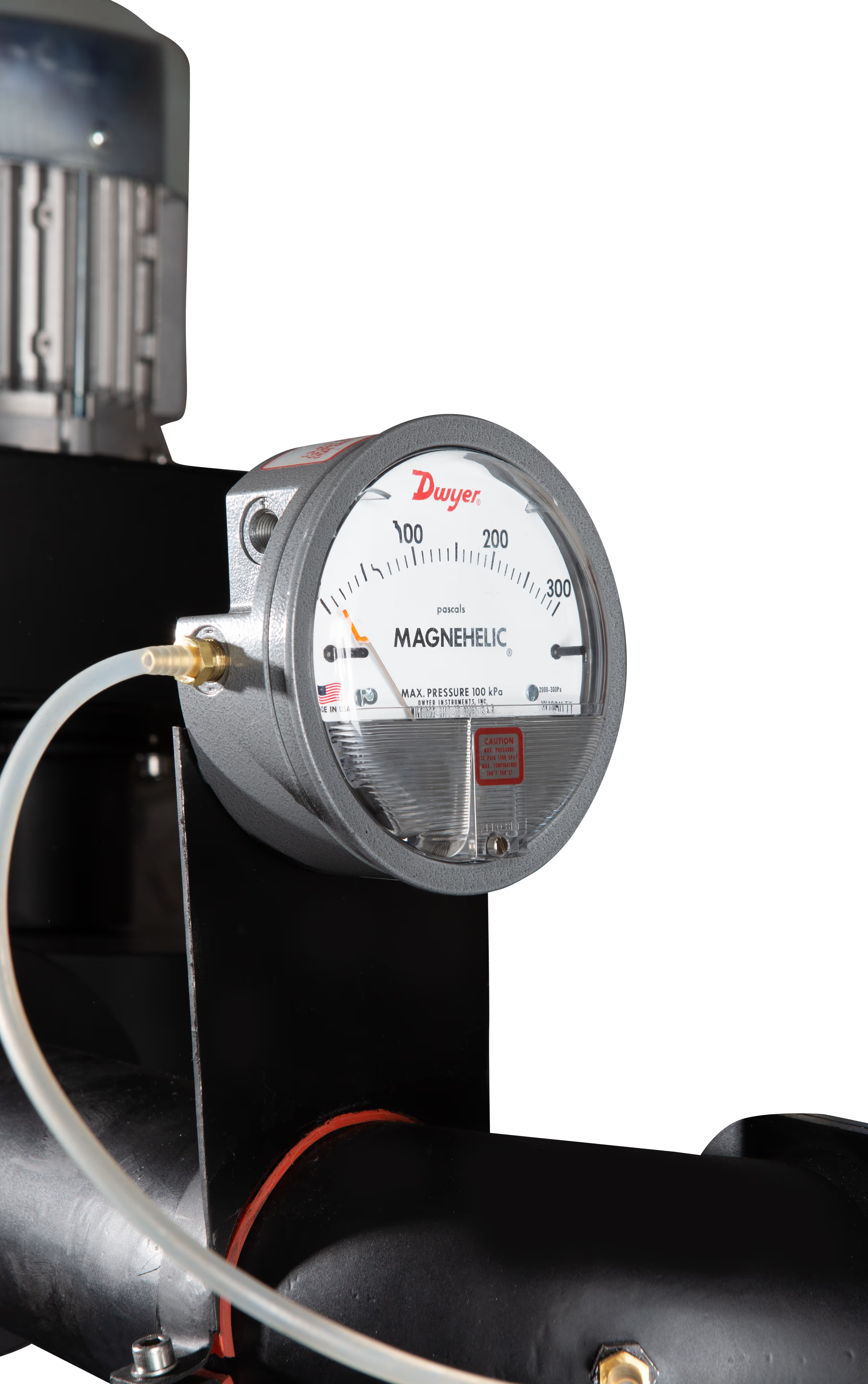
- Pressure fluctuations affect roasting
As explained in Airflow control in commercial coffee roasters, air is both a heat carrier and a stabilizer.
Burner power without proper airflow control leads to inconsistent results.
Heat Recovery Between Batches
In commercial production environments, machines run continuously.
A well-engineered burner system ensures:
✔ Fast heat recovery ✔ Stable drum temperature ✔ Consistent batch-to-batch performance
Weak burner systems may struggle:
- Slower recovery time
- Increased energy fluctuations
- Higher operator compensation
Over time, this reduces production efficiency and profitability.
If you are evaluating machines for professional production, start with the complete guide to commercial coffee roasting machines to understand structural differences.
Maintenance Considerations in Gas Burner Systems
Professional burner systems should be:
- Accessible for inspection
- Easy to clean
- Designed for stable long-term use
Poorly designed systems may suffer from:
- Carbon buildup
- Inconsistent ignition
- Flame instability
Industrial-grade burner components improve long-term reliability.
This matters especially in high-output roasting facilities.
What Buyers Should Ask About Burner Systems
Before choosing a gas coffee roaster, ask:
- What type of burner is used (atmospheric or premix)?
- How precise is burner modulation?
- How quickly does it respond to adjustments?
- How is flame distributed under the drum?
- How does it perform during consecutive batches?
Burner system quality directly impacts roast control.
Final Thoughts
In gas coffee roasters, the burner is not just a heat source.
It is the engine of roast development.
A professional commercial coffee roaster is defined by:
- Stable flame control
- Balanced heat transfer
- Fast response time
- Integrated airflow design
Capacity numbers attract attention.
Burner engineering defines performance.
And in professional roasting, performance defines consistency.